Why Do Partners Drift Apart In Long Distance?
Editorial Team6 min readUpdated 1 Sep 2026
Loading…
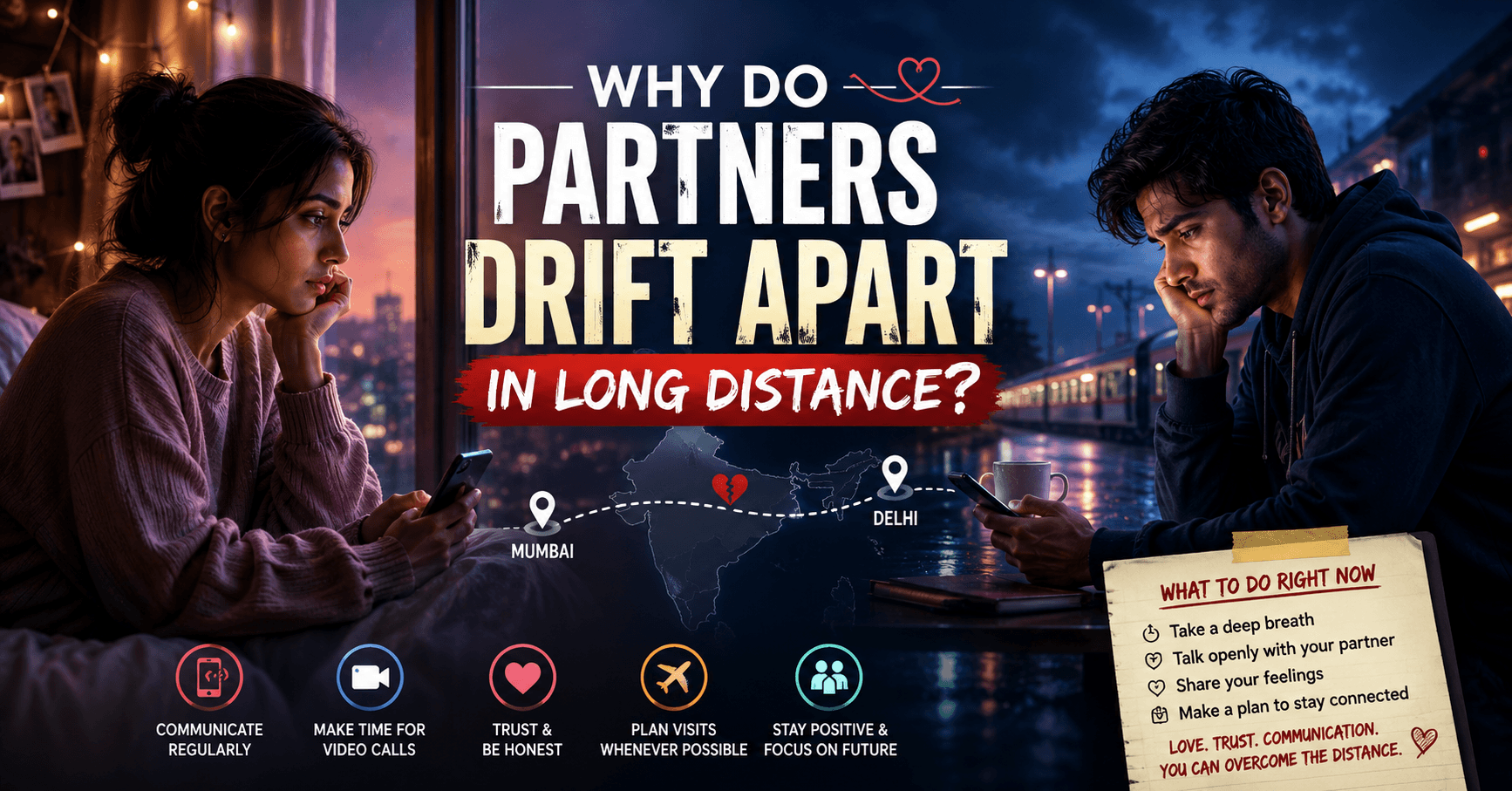
It started with romantic video calls. Late-night conversations about dreams. Funny jokes to make each other laugh. Then one day… silence. No calls. No messages. No explanations. Just an empty feeling. The distance that once felt manageable now feels like an ocean. What's happening to us?
Psychologists believe that partners drift apart in long distance for many reasons. Some struggle with the lack of physical intimacy. Others feel disconnected due to limited communication. The distance can also lead to feelings of insecurity and jealousy. When we're apart, it's easy to overthink and imagine the worst. Our minds start to wander, and we begin to doubt the relationship. This can lead to a breakdown in trust, which is essential for any relationship to survive. Trust is built on small, everyday interactions, which can be challenging to maintain when you're physically apart.
When we're in a long-distance relationship, we often rely on technology to communicate. While this can be helpful, it can also create a sense of disconnection. We might feel like we're not really talking, just sending messages back and forth. This can lead to feelings of frustration and isolation. Additionally, the lack of nonverbal cues, such as body language and tone of voice, can make it difficult to understand each other's emotions.
It's also important to consider the concept of "emotional intimacy." This refers to the feeling of being connected to someone on a deep, emotional level. When we're in a long-distance relationship, it can be challenging to maintain emotional intimacy. We might feel like we're not really sharing our feelings or connecting with each other on a meaningful level. This can lead to feelings of disconnection and drift.
Moreover, the distance can also lead to a sense of uncertainty. We might start to wonder if our partner is still committed to the relationship, or if they're moving on with their life without us. This uncertainty can be overwhelming, and it can be difficult to shake off the feeling that we're not a priority in our partner's life. Furthermore, the lack of shared experiences and memories can also contribute to the sense of disconnection. When we're apart, we're not creating new memories together, and this can make it feel like we're growing apart.
The concept of "attachment styles" can also play a role in long-distance relationships. Our attachment style refers to the way we form and maintain relationships. Some people have a secure attachment style, which means they feel comfortable with intimacy and can maintain a sense of security in their relationships. Others may have an anxious or avoidant attachment style, which can make it more challenging to navigate long-distance relationships. Understanding our attachment style and how it affects our relationships can be helpful in building a stronger connection with our partner.
Imagine you're a student in Mumbai, and your partner is working in Delhi. You've been together for a few years, but now you're facing a long distance. You try to make it work, but it's not easy. You feel like you're losing touch, and the distance is taking a toll on your relationship. You start to wonder if it's worth it, if the love you share is strong enough to overcome the distance.
Picture this: you're in a relationship with someone you met on a dating app in Indore. Things were going great, but then your partner had to move to another city for work. You're trying to make the relationship work, but it's not easy. You feel like you're not really talking, just sending messages back and forth. You start to feel like you're losing the connection, and the distance is driving you apart. You feel confused, hurt, and unsure of what to do.
In India, long-distance relationships are common due to education, career, or family obligations. Many couples face the challenge of maintaining a relationship despite the physical distance. It's not just about the distance; it's about the emotional connection, the trust, and the communication. When we're apart, we need to work harder to maintain that connection. We need to make an effort to talk, to share our feelings, and to stay connected.
For example, consider a couple who met while working in Bangalore. They were together for a few years, but then one of them had to move to Hyderabad for a job opportunity. They tried to make it work, but the distance started to take a toll on their relationship. They felt like they were growing apart, and the lack of physical intimacy was becoming a major issue. They had to find ways to maintain their emotional connection, such as scheduling regular video calls and sharing their feelings with each other.
Another example is a couple who were in a long-distance relationship while one of them was studying abroad. They had to navigate the challenges of different time zones, cultural differences, and language barriers. They had to be creative in finding ways to stay connected, such as watching movies together online or playing games together. They also had to be patient and understanding, as the distance and time difference could be frustrating at times.
In India, the concept of "arranged marriages" can also play a role in long-distance relationships. In some cases, couples may be separated due to family or social obligations, and they may have to navigate the challenges of a long-distance relationship while also dealing with the expectations of their families and society. This can be particularly challenging, as the couple may have to balance their own needs and desires with the expectations of those around them.
What to do right now Take a deep breath and acknowledge your feelings. It's okay to feel hurt, confused, or unsure. Reach out to your partner and have an open and honest conversation about your feelings. Make a plan to stay connected, whether it's through regular video calls or messaging. Remember, maintaining a long-distance relationship takes effort, but it can also bring you closer together. Focus on building trust, communicating effectively, and nurturing your emotional connection. With patience, love, and commitment, you can overcome the distance and build a stronger relationship. Start by scheduling a video call with your partner and talking about your feelings, concerns, and expectations. Be honest and open with each other, and work together to find ways to stay connected and maintain your emotional intimacy.
Why Do Partners Drift Apart In Long Distance?
It started with romantic video calls. Late night conversations about dreams. Funny jokes to make each other laugh.
It started with romantic video calls. Late night conversations about dreams. Funny jokes to make each other laugh.
Psychologists believe that partners drift apart in long distance for many reasons.
Imagine you're a student in Mumbai, and your partner is working in Delhi. You've been together for a few years, but now you're facing a long distance.
Communicate regularly, but also respect each other's space Make time for regular video calls to stay connected Share your feelings, thoughts, and experiences with each other Trust each other and avoid jealousy or insecu…
Communicate regularly, but also respect each other's space Make time for regular video calls to stay connected Share your feelings, thoughts, and experiences with each other Trust each other and avoid jealousy or insecurity Plan visits or trips to see each other whenever possibl…
Found this helpful? Tap like — it helps us know what readers enjoy.
Share your thoughts. Comments appear after a quick review.
Loading comments…
Reader membership
Want bonus guides and early access? Purchase a Thinkora Reader Pass.
Keep reading
Bookmark this site, explore more in the same lane, or tell a friend who overthinks at 2 AM — that is how good ideas spread without ads.