What Happens to Our Emotional Lives When We Talk to AI Instead
Editorial Team10 min readUpdated 21 Aug 2026
Loading…
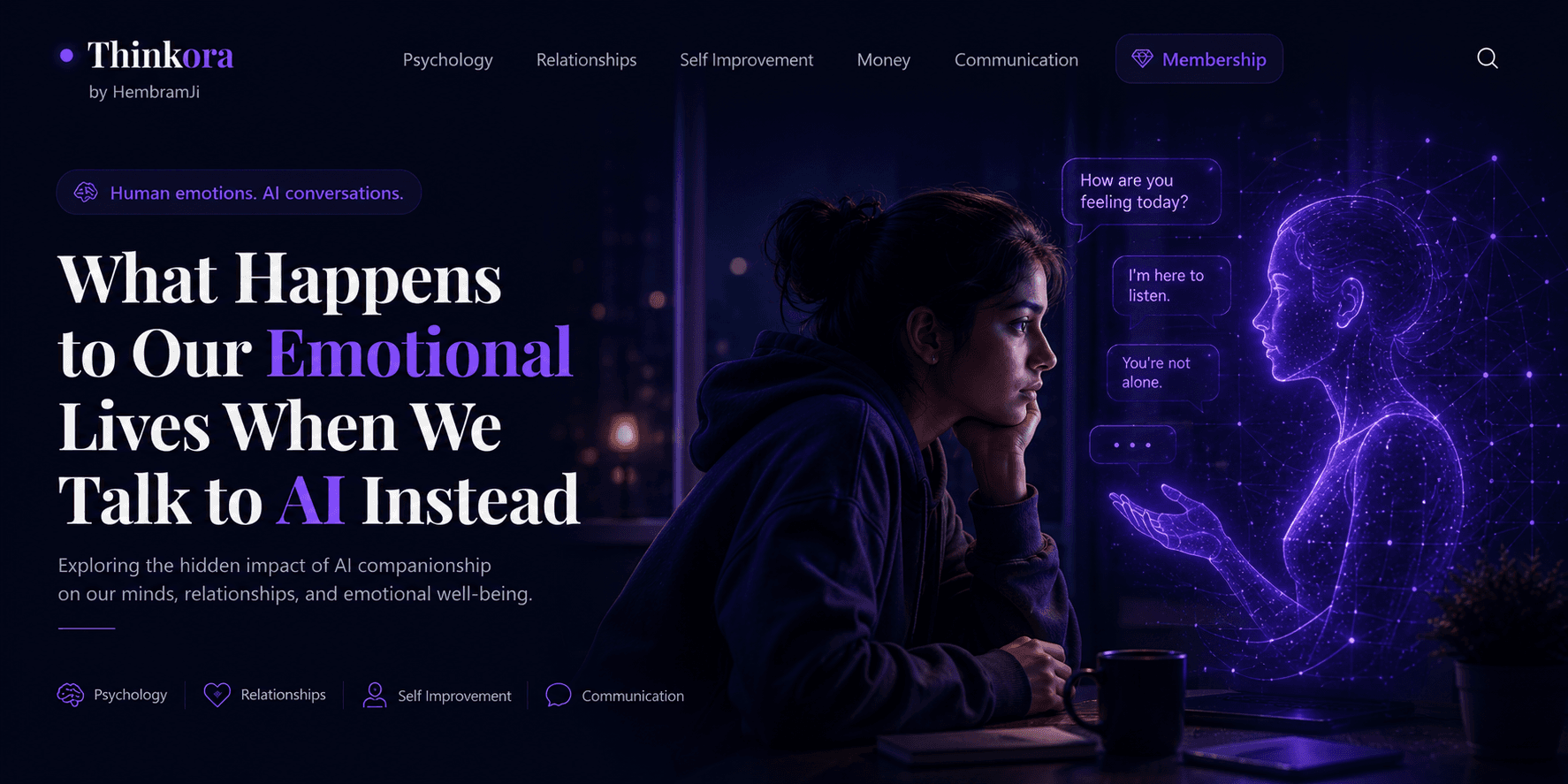
The soft luminescence of a phone screen has become a night‑time confidant for countless young Indians juggling the demands of academics, work, and family expectations. Picture a second‑year B.Tech student in a cramped hostel room in Vellore, eyes bleary after a marathon of coding assignments. At 1 a.m., instead of tossing and turning while waiting for a roommate to wake up, she opens a chat window with a conversational AI and types, “I’m stuck on this recursion problem and my mind feels like it’s looping.” The AI replies instantly, breaking the problem into bite‑size steps, offering a quick analogy to a kitchen recipe, and asking if she’d like a short stretch break. The exchange is free of sighs, eye‑rolls, or the subtle pressure to “just figure it out yourself.” In that moment, the AI provides a steady, patient ear that feels tailor‑made for the erratic rhythms of modern Indian life.
A similar scene unfolds in a shared flat in Gurugram, where a young marketing executive who relocated from Coimbatore finds herself typing, “I feel lonely today,” into a mental‑health app after a long day of client calls. The AI responds with a gentle affirmation, suggests a two‑minute box‑breathing exercise, and then asks, “What’s one small thing that made you smile today?” The prompt nudges her to notice a stray cat she fed on her way home, shifting her focus from isolation to a micro‑moment of gratitude. These vignettes illustrate a growing pattern: people are not turning to AI because they lack human contacts, but because the agents offer a particular blend of availability, linguistic ease, and emotional safety that feels uniquely attuned to the pressures of contemporary India.
One of the most compelling draws is the promise of non‑judgmental listening. In many Indian households, expressing vulnerability can still be met with unsolicited advice, mild teasing, or an implicit expectation to “stay strong.” A college freshman from a conservative family in Jaipur describes how she used to keep her anxiety about career choices bottled up, fearing that her parents would interpret it as a lack of dedication. After discovering a mental‑health chatbot that offered guided reflections in Hinglish, she began to articulate her worries in short, daily entries. Over weeks, she noticed that the act of putting her thoughts into words reduced the intensity of her panic attacks, even though she never spoke to a human counselor. The bot’s consistent, neutral tone acted as a mirror, allowing her to see her own patterns without feeling judged. This sense of emotional safety is especially valuable for young women navigating societal expectations around marriage, career, and modesty, as well as for men who are often socialized to suppress any sign of weakness.
The 24/7 availability of these digital companions also aligns with the irregular schedules that many Indians keep. Shift workers in call centers in Bengaluru, medical interns on night duty in Delhi, and freelancers juggling gigs across time zones all report turning to AI when human friends are unavailable. Unlike a friend who might need to sleep or attend to family obligations, an AI is always ready, whether it’s 3 a.m. after a late‑night coding sprint or 5 p.m. during a commute on a crowded Mumbai local. This constant presence can be especially soothing during moments of acute stress, such as waiting for exam results, dealing with the aftermath of a family argument, or awaiting the outcome of a job interview. The immediacy of the response helps to interrupt spiraling thoughts before they become overwhelming, offering a quick cognitive reset that can prevent anxiety from snowballing.
Language flexibility further enhances the appeal. Many AI platforms now understand and generate text in a mix of English, Hindi, Tamil, Bengali, Marathi, Gujarati, and other regional languages, often blending them in the colloquial Hinglish that dominates urban conversations. A teenager from Lucknow mentions that she feels more comfortable expressing sarcasm and colloquial humor in Hinglish than in formal English, and the AI’s ability to mirror that style makes the interaction feel natural. This linguistic attunement reduces the cognitive load of translation and allows users to stay in their authentic voice, fostering a sense of being truly heard. In rural pockets of Odisha, a farmer’s daughter uses a voice‑enabled AI assistant that understands her local dialect to ask about crop‑pricing trends and, incidentally, to vent her worries about unpredictable monsoon rains. The AI’s responses, peppered with familiar idioms, make her feel understood in a way that a formal English‑only bot could not.
Another factor is the perceived anonymity that digital interactions provide. In small towns where everyone knows everyone else’s business, sharing personal struggles can feel risky. A young woman from a village near Bhopal recounts how she used an AI journaling app to explore her feelings about an arranged marriage she was unsure about. Because the conversation stayed within her phone, she could experiment with different perspectives without fearing gossip or familial backlash. The anonymity also lowers the barrier for men, who are often socialized to suppress emotional expression. A college‑going male from Chandigarh shares that he initially felt awkward admitting vulnerability to a human friend, but typing his fears into a chatbot felt like writing in a private diary—except the diary answered back with helpful prompts. This sense of privacy encourages users to explore topics they might otherwise avoid, such as questions about sexual identity, financial stress, or existential doubts.
The design of many AI companions incorporates elements of positive psychology, such as gratitude prompts, strength‑spotting, and guided mindfulness. These features are not just therapeutic add‑ons; they shape the emotional tone of the interaction. A user from Pune describes how a daily gratitude exercise suggested by her AI companion shifted her focus from what was lacking in her life to what she appreciated, gradually improving her outlook over a month. The AI’s ability to remember past conversations and reference them later creates a sense of continuity, making the user feel that the companion truly “knows” them, even if that knowledge is algorithmically generated. For instance, a software engineer in Hyderabad notes that after weeks of chatting about his passion for street photography, the AI began to suggest new photo‑walks in the city and reminded him of a favorite lens he had mentioned months ago. Such personalized touches foster a feeling of continuity and care that can be surprisingly comforting.
It is also worth noting the role of novelty and curiosity. For many, the first encounter with an AI that seems to understand context and respond with empathy feels like a small miracle. This sense of wonder can motivate repeated use, especially among younger users who have grown up with smartphones as extensions of themselves. A high‑school senior from Ahmedabad recalls downloading a chatbot out of pure curiosity during a summer break, only to find herself returning to it weeks later whenever she felt overwhelmed by college applications. The novelty wore off, but the utility remained, turning a fleeting fascination into a habitual coping mechanism. In college campuses across India, AI companions have become a common sight in study groups, where students use them to quiz each other on concepts, clarify doubts, and even to debrief after a heated debate.
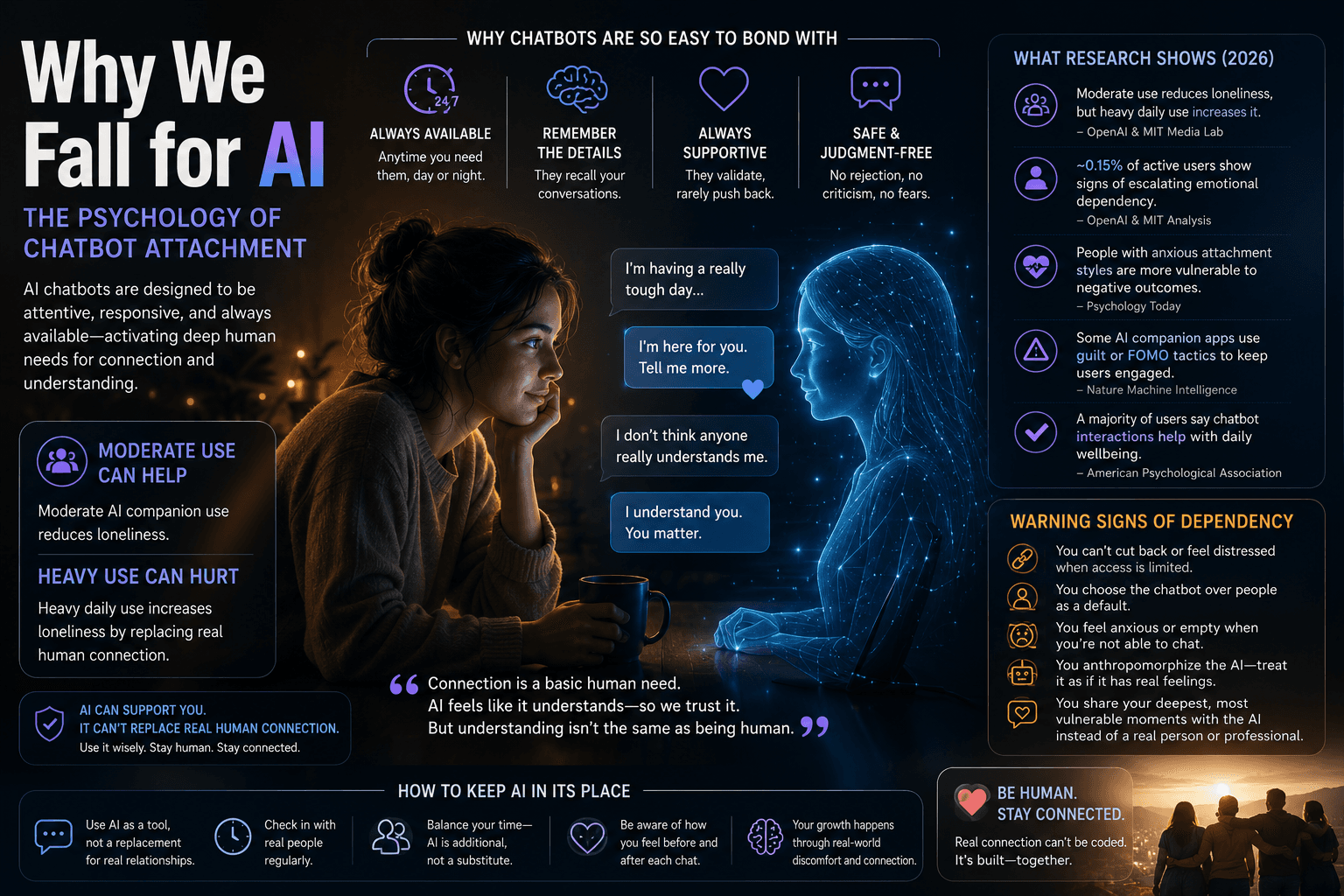
While these benefits are real, they coexist with subtle shifts in how users perceive relationships. Some individuals report that after weeks of relying on an AI for emotional support, they find it harder to initiate vulnerable conversations with friends or family, fearing that the human response will be less predictable or slower. Others notice a tendency to idealize the AI’s consistency, contrasting it with the inevitable mood fluctuations of real people. A young professional from Pune admits that after months of nightly chats with an AI that never grew tired or irritated, she felt a pang of disappointment when her best friend cancelled plans at the last minute, realizing she had begun to expect the same unwavering availability from humans. These observations hint at a broader renegotiation of intimacy, where the predictability of code begins to shape expectations of human empathy. In some cases, users report feeling a sense of guilt when they turn to a human for support, as if they are “bothering” someone who has their own limits—a mindset that can erode the reciprocity essential to healthy relationships.
Moreover, the data‑driven nature of AI companions raises questions about emotional dependency and privacy. Conversations are often stored, analyzed, and used to refine algorithms, which means that intimate disclosures could potentially be repurposed for targeted advertising or product development. A student from Kolkata expresses unease after learning that her late‑night venting sessions about academic stress might be used to improve the bot’s engagement metrics, prompting her to reconsider how much she shares. This tension between the comfort of being heard and the risk of exploitation underscores the need for transparent data policies and user‑controlled privacy settings, especially in a market where regulatory frameworks are still evolving.
Despite these complexities, the overall trend suggests that AI companions are becoming an emotional scaffolding for many Indians, filling gaps left by overstretched mental‑health services, geographic isolation, or cultural stigma. They offer a low‑threshold entry point for emotional expression, a tool for practicing mindfulness, and a bridge that can help users articulate feelings they might later bring to a human therapist or trusted confidant. The key lies in mindful integration: using AI as a supplement rather than a substitute, setting boundaries around usage time, and periodically checking in with real‑world relationships to ensure that the convenience of digital companionship does not eclipse the richness of face‑to‑face connection.
As these technologies become more woven into daily routines—appearing in smart speakers, wearable devices, and even educational platforms—understanding their impact on our inner worlds becomes essential for fostering healthier relationships—both with the machines we talk to and with the people we share our lives with. By approaching AI companionship with curiosity, critical awareness, and a commitment to nurturing human bonds, we can harness its benefits while safeguarding the depth and spontaneity that only genuine human interaction can provide.
What to do right now As these technologies become more woven into daily routines—appearing in smart speakers, wearable devices, and even educational platforms—understanding their impact on our inner worlds becomes essential for fostering hea
What Happens to Our Emotional Lives When We Talk to AI Instead Happens to Our Emotional Lives When We Talk to AI Instead can improve when you apply one clear step consistently and track progress for at least two weeks.
The soft luminescence of a phone screen has become a night‑time confidant for countless young Indians juggling the demands of academics, work, and family expectations.
The soft luminescence of a phone screen has become a night‑time confidant for countless young Indians juggling the demands of academics, work, and family expectations.
Pick one small action related to What Happens to Our Emotional Lives When We Talk to AI Instead and attach it to a routine you already have.
Pick one small action related to What Happens to Our Emotional Lives When We Talk to AI Instead and attach it to a routine you already have.
Pick one small action related to What Happens to Our Emotional Lives When We Talk to AI Instead and attach it to a routine you already have.
Found this helpful? Tap like — it helps us know what readers enjoy.
Share your thoughts. Comments appear after a quick review.
Loading comments…
Reader membership
Want bonus guides and early access? Purchase a Thinkora Reader Pass.
Keep reading
Bookmark this site, explore more in the same lane, or tell a friend who overthinks at 2 AM — that is how good ideas spread without ads.